
Connection As the Product: Building Brand Value Through In-Person Experiences
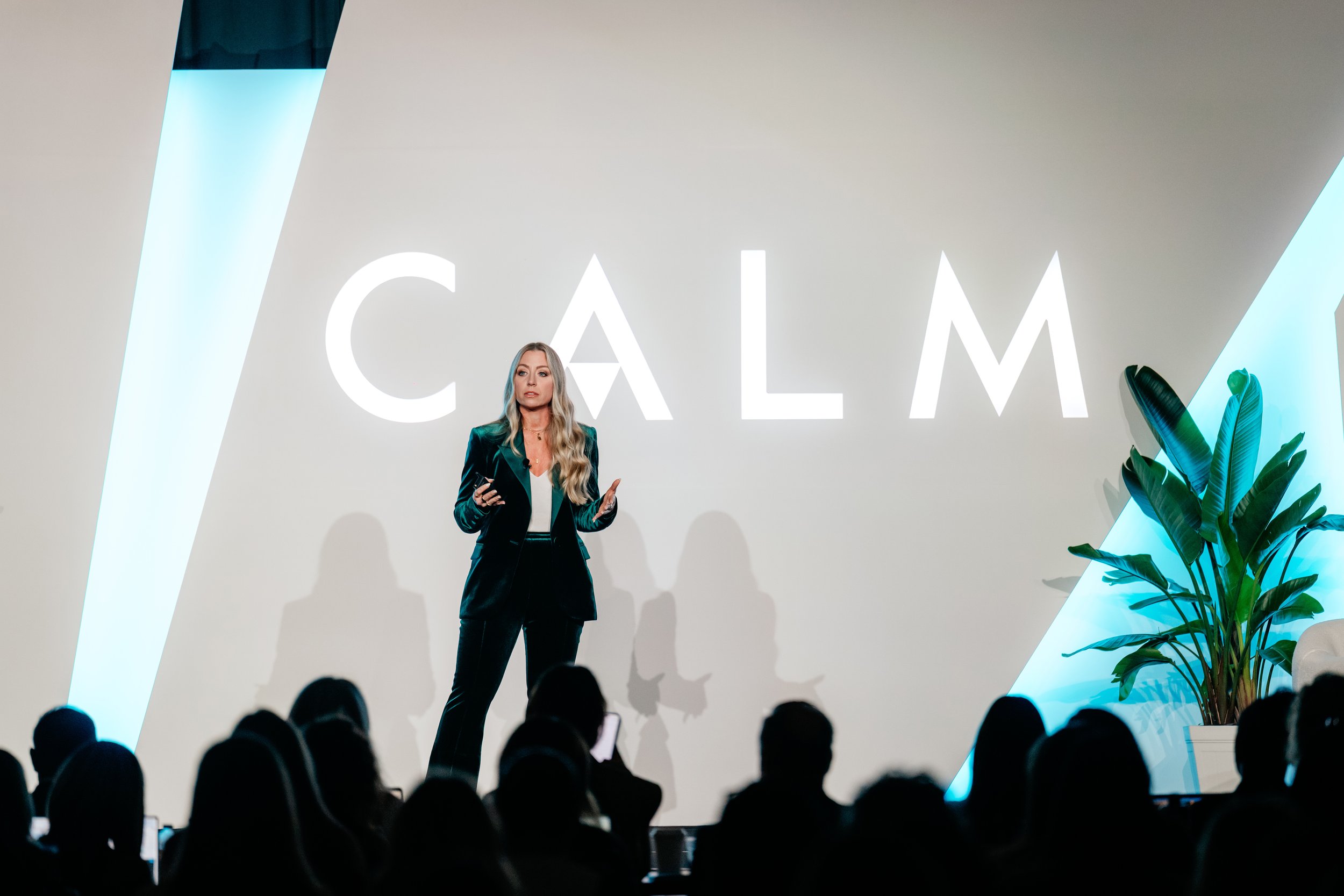
Photo credit: James Bridle Photography, Event: CALM, the Clinical Application of Longevity Medicine
The appetite for in-person, immersive brand experiences is not a trend. It's a fundamental behavioral shift, and the brands that recognize it first are the ones quietly building the most loyal, engaged communities in their markets right now.
Maybe it’s generational, maybe it’s trained behavior through entertainment-driven tech, whatever it is, the expectation for interactive formats is just that, expected. That expectation doesn't disappear when they encounter your brand. It intensifies. And with the U.S. immersive experience market estimated at $3.9 billion and growing at 21% annually, the gap between what audiences want and what most brands deliver is wide open. That connection gap is an opportunity.
Experiences Create What Marketing Can't Buy
Most business owners and leaders still underestimate the value of an impression and the difference between one made during an experience and one made by an ad. These impressions aren’t slightly different; they’re categorically different.
Neuroscience has been telling us this for decades. Harvard researcher Gerald Zaltman's work suggests roughly 95% of purchasing decisions are made subconsciously, driven by emotion, sensory memory, and narrative association. Daniel Kahneman's research on the "remembering self" explains why people don't evaluate experiences by averaging their feelings over time; they remember the peak emotional moment and the ending. That's it. Brands that design with that understanding aren't just creating events, they're encoding themselves into memory in a way no campaign budget can replicate.
Why is this so critical? Because one well-executed in-person experience can do more for brand loyalty than months of digital spend. Not because it reaches more people, but because it reaches people differently and at the level where identity, belonging, and trust actually live, then word of mouth brings it home.
Your Brand as the Attraction, the Matchmaker, and the Meaning-Maker
This is where most brands miss the mark. They may get one or even two of these, but rarely hit all three. They create an event, check the box, and measure foot traffic. Or they create intentional environments for networking but don’t fully commit to facilitating the experience. The real opportunity is structural, positioning your brand as the facilitator of connection between your audience members, not just between your brand and your audience.
When you build that kind of experience, something shifts. Your brand stops being a product or a service and becomes a context for meaningful human experience. Maslow put belonging just behind basic survival needs for a reason. People are hardwired to seek it. Brands that create environments where belonging genuinely happens become identity anchors, giving them a fundamentally different competitive edge in their market.
Think of it this way: a matchmaker sees potential between two people. Your brand can go further by becoming all three: the core attraction, the connector, and the meaningful reason people showed up in the first place. That's not marketing. That's community architecture and one powerful take on brand positioning.
Quality Isn't a Budget. It's a Decision.
Now, before anyone reads this as a pitch to throw an unnecessarily fancy or out-of-scope event, let's be clear. Not all experiences are created equal, and audiences feel the difference faster than most brands are comfortable admitting.
The 2025 Evolving Immersive Industry Report from the Immersive Experience Institute found that 43% of audience members said marketing "sometimes" misrepresented the experience they attended. Nearly 20% said it happened frequently. The result? An audience of skeptics, tired of overpromising, and quick to share what they remember most, the missed expectation.
Brands need to dig deep, understand their audiences’ vision for belonging at a core level, and live that vision transparently while creatively aligning it with the experiences they offer. This is why brand strategy (and psychology - however, I may be biased) is so critical to business development. The subjectivity of “brand” is and has always been difficult to universally explain, but the speed at which it’s evolving certainly isn’t helping its case. Those who decide to invest in brand at this level and maintain a pulse on its trajectory are uniquely positioned to cultivate successful experiences.
Practically speaking, this means quality in experiential branding isn't a line item. It's an intentional decision. It's the tasteful judgment to know what your audience actually needs to feel seen, elevated, and at home in an experience you've built for them. That requires genuine investment in brand strategy and understanding your audience's vision for belonging, not just their demographics. It requires transparency in what you're promising. And it requires creative alignment between what your brand stands for and the experience you're putting into the world. Whatever your budget, when those three things are in sync, audiences feel it immediately. When they're not, they feel that too.
Cross-Pollination Is Brand Efficiency at Scale
One of the most underutilized strategies in experiential brand development is collaborative experience design. It’s the idea that “you grow, we all grow,” bringing complementary brands together to build something none of them could execute alone.
The logic is straightforward. When like-minded brands share networks around a shared experience, audiences cross-pollinate. Each brand deepens its relationships while expanding its reach through the credibility of its partners. The experience becomes the platform. The brands become the programming. And the community that forms around it creates compounding returns for everyone involved. This takes curated experiences beyond products or services and into the brand ecosystem level.
This is what the entertainment industry has already figured out. Multi-brand, multi-IP experience hubs are generating audience loyalty that individual activations can't touch, because the shared context creates a sense of belonging that feels bigger than any single brand. From an audience viewpoint, it feels less like they’re being sold to, making the experience more community-centric and socially relatable. The same logic applies to non-entertainment brands. If your brand and your partner's brand values genuinely align, a shared experience doesn't dilute; it actually amplifies.
Authenticity Is the Only Non-Negotiable
For someone whose work centers on brand authenticity as a core differentiator, this is where it all comes back to one thing: congruence. What you sell has to match what you give. Full stop.
In-person experiences can't be faked the way digital content can. The dissonance between what a brand promises and what it actually delivers hits people in the room in real time. And those that feel off, the ones with inauthentic signaling and misaligned energy, don't just underperform. They do active damage to the brand reputation in real time and at scale (yikes).
But here's the other side of that equation … brands that do deliver, that show up with high-quality, emotionally resonant, genuinely community-centered experiences, earn something that no algorithm can manufacture. They earn trust through felt memory and undeniable connection. And audiences don't just stay loyal to brands like that. They recruit for them.
The Real Opportunity
The brands best positioned for the next decade are not the ones with the biggest budgets. They're the ones willing to prioritize meaning, connection, and follow-through on creative thinking. The brands that understand that, at its core, successful branding is merely a tool for human connection and that in-person experience is simply the most powerful version of that tool available.
The technology will keep changing. The platforms will keep multiplying. But the human need to belong, feel seen, and be part of something real and bigger than commerce alone doesn't evolve. Build for that, and you're not just running a brand. You're building the infrastructure of the community itself. An ecosystem where exponential value lives.
If you’re looking to bring your brand to life through an immersive experience, I’d love to connect with you. We can conceptualize and shape an experience that fits your brand and your audience through my work with Build Smart Brands and our event partners at Experiential Producers. Together, we can build an unforgettable experience that puts connection at the center of your brand experience.
And if you’re curious to learn how this supports my battle with the growing use of AI and its effects on brand experiences, you can read about that here.
If you like articles like this and want to read more, you can find me on LinkedIn and Instagram, where I often share brand psychology insights and tips, or you can find more of my thoughts here.